Montenegro · The South
Montenegro’s southernmost town — an Illyrian-walled kasbah above a small bay, with thirteen kilometres of sand, a salt lagoon full of flamingos and the country’s best light.
Ulcinj is Montenegro's southernmost coastal city, a place where the Adriatic meets a rich tapestry of Albanian, Ottoman, and Mediterranean influences to create an atmosphere unlike anywhere else on the Montenegrin coast. Perched on a rocky headland, the ancient Old Town fortress has watched over these waters for more than two millennia, its stone walls enclosing a compact maze of lanes, small museums, and restaurants serving fresh fish with a distinctly southern Balkan flair. The star attraction is Velika Plaža — the Great Beach — a remarkable unbroken stretch of fine dark sand that extends for 13 kilometers southeast of town, making it one of the longest beaches on the Adriatic. Its shallow, gently sloping waters and reliable summer winds have turned it into one of the premier kite surfing destinations in the Mediterranean, with several schools and rental outfits lining the shore. At the far southeastern end, the Bojana River fans out into a wild delta where the island of Ada Bojana sits — a bohemian retreat known for its river-front fish restaurants, water sports, and one of Europe's most famous naturist beaches. Beyond the beaches, Ulcinj offers a wealth of natural wonders. The salt pans on the outskirts of town form an important wetland habitat where flocks of flamingos, pelicans, and other migratory birds gather, making it a paradise for birdwatchers. The surrounding countryside, with its olive groves and scattered hilltop villages, rewards exploration by car or bicycle. Ulcinj is roughly 30 minutes from Podgorica Airport (TGD) and is also accessible from Tirana International Airport in neighboring Albania. The city's unique cultural character, long beaches, wind sports and a distinctly mixed Montenegrin-Albanian character make it one of the most distinctive and rewarding destinations on the entire Adriatic coast.

1908TodayPhotographs: Montenegro.com
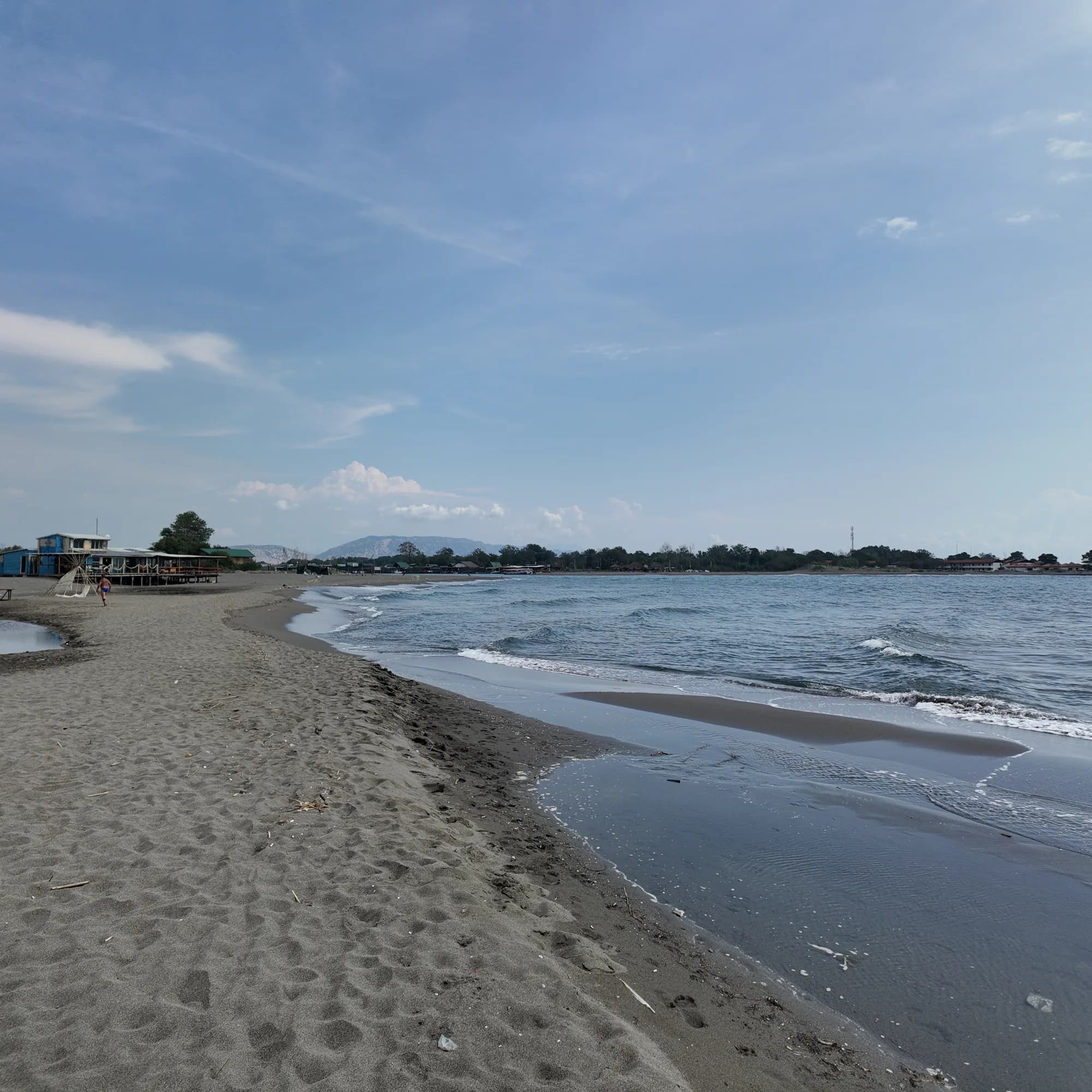
Ada Bojana: the open beach and the sea on a grey September morning
The mouth of the Bojana at Ada, the river restaurants’ boats drawn up on the sand
The Bojana from the road bridge: fish restaurants on piles along both banks
Timber houses on piles over the green water of the Bojana
The kalimeras of Port Milena, the old lift-nets on their wooden frames
Along the Port Milena canal towards the new apartment blocks
A small Catholic church in the fields south of Ulcinj, on the road towards Ada Bojana
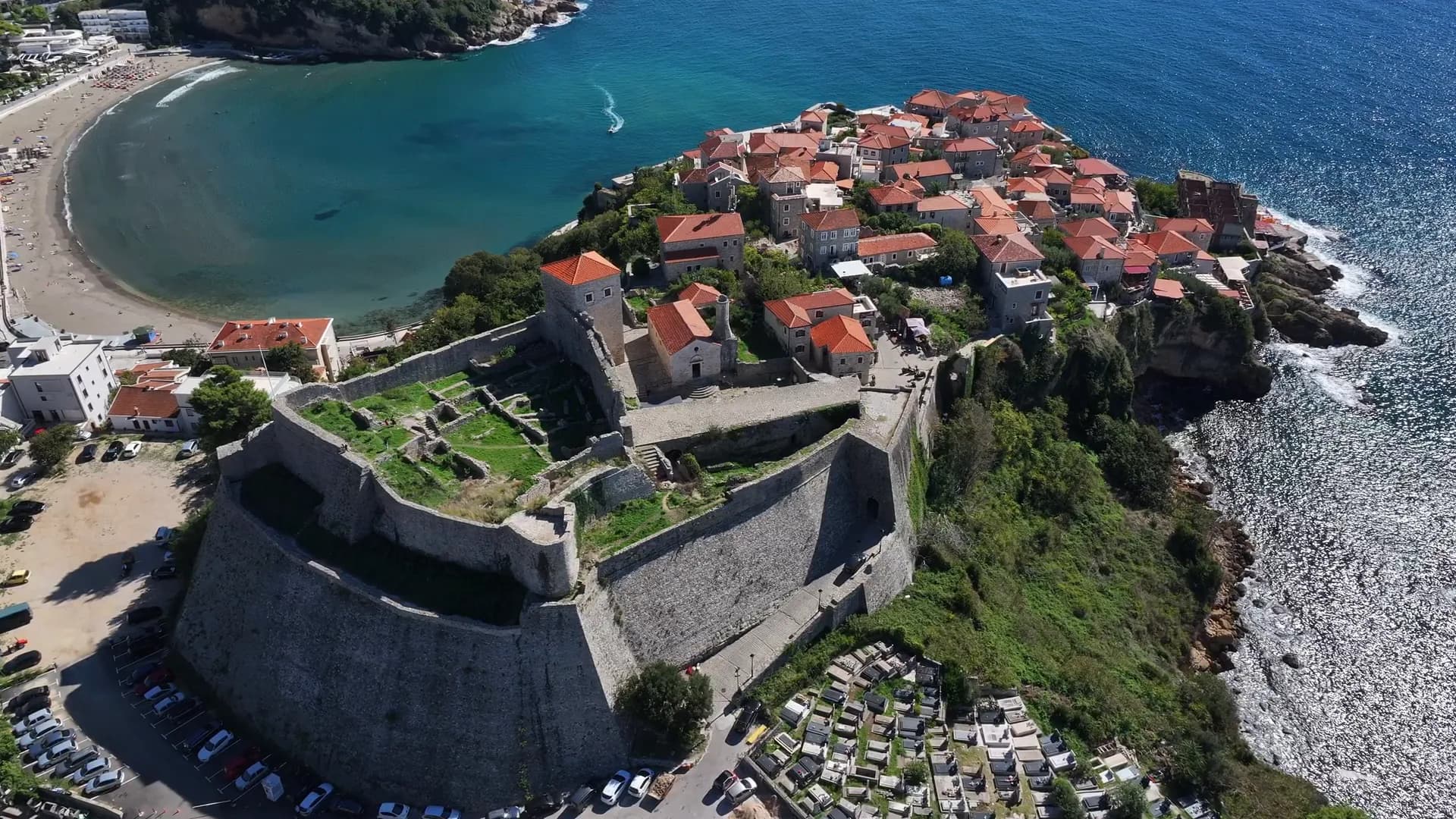
Footage: Montenegro.com, CC BY 4.0
RAW photo
3840 × 2160 · DNG · DJI Osmo Pocket 3
The camera’s own DNG, ungraded — develop it your way.
Download the DNG (18 MB)Original recording and photograph by Montenegro.com, licensed CC BY 4.0: free to share and adapt, with credit to Montenegro.com. Using them commercially? Please credit Montenegro.com and link back to this page.
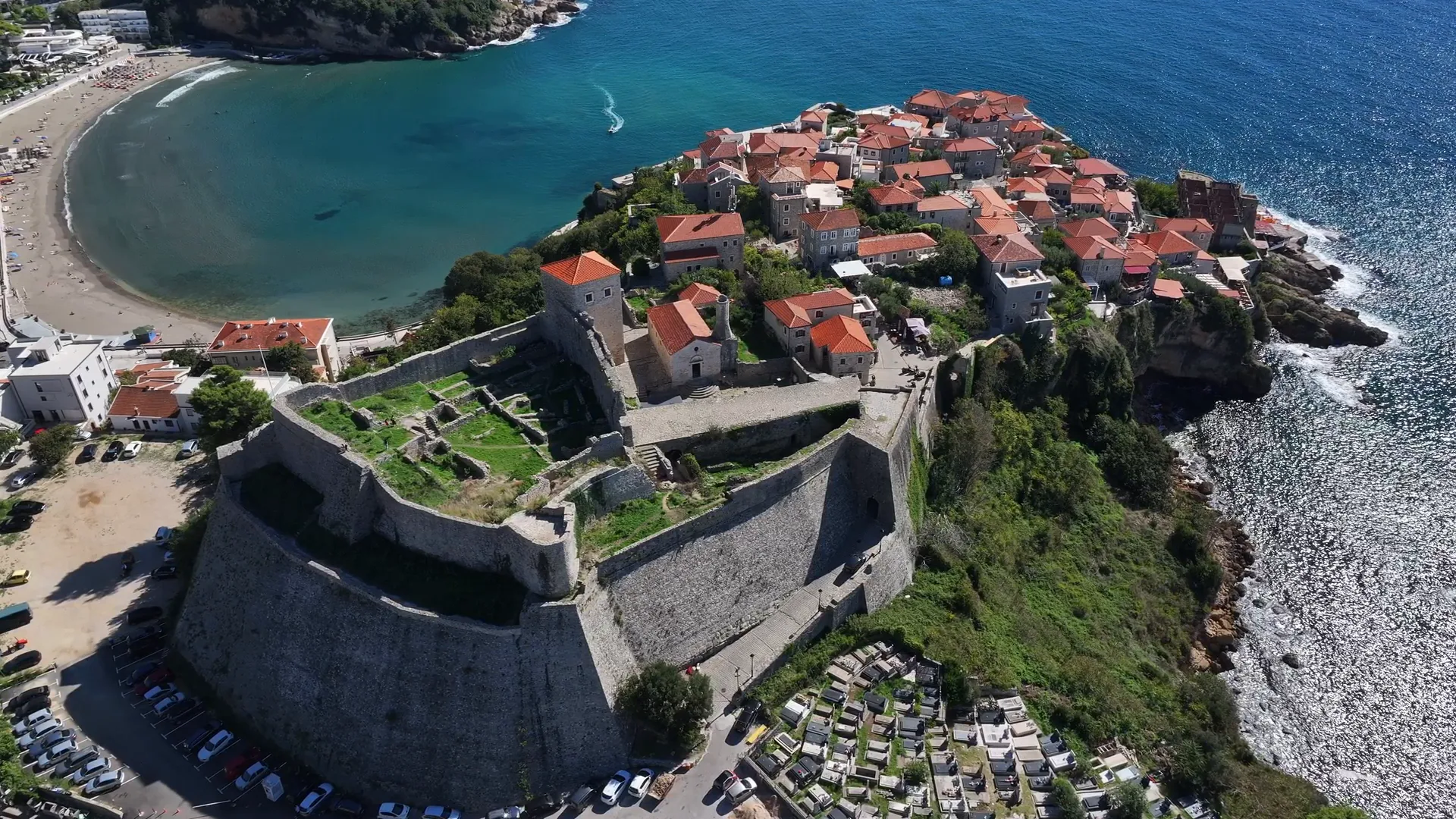
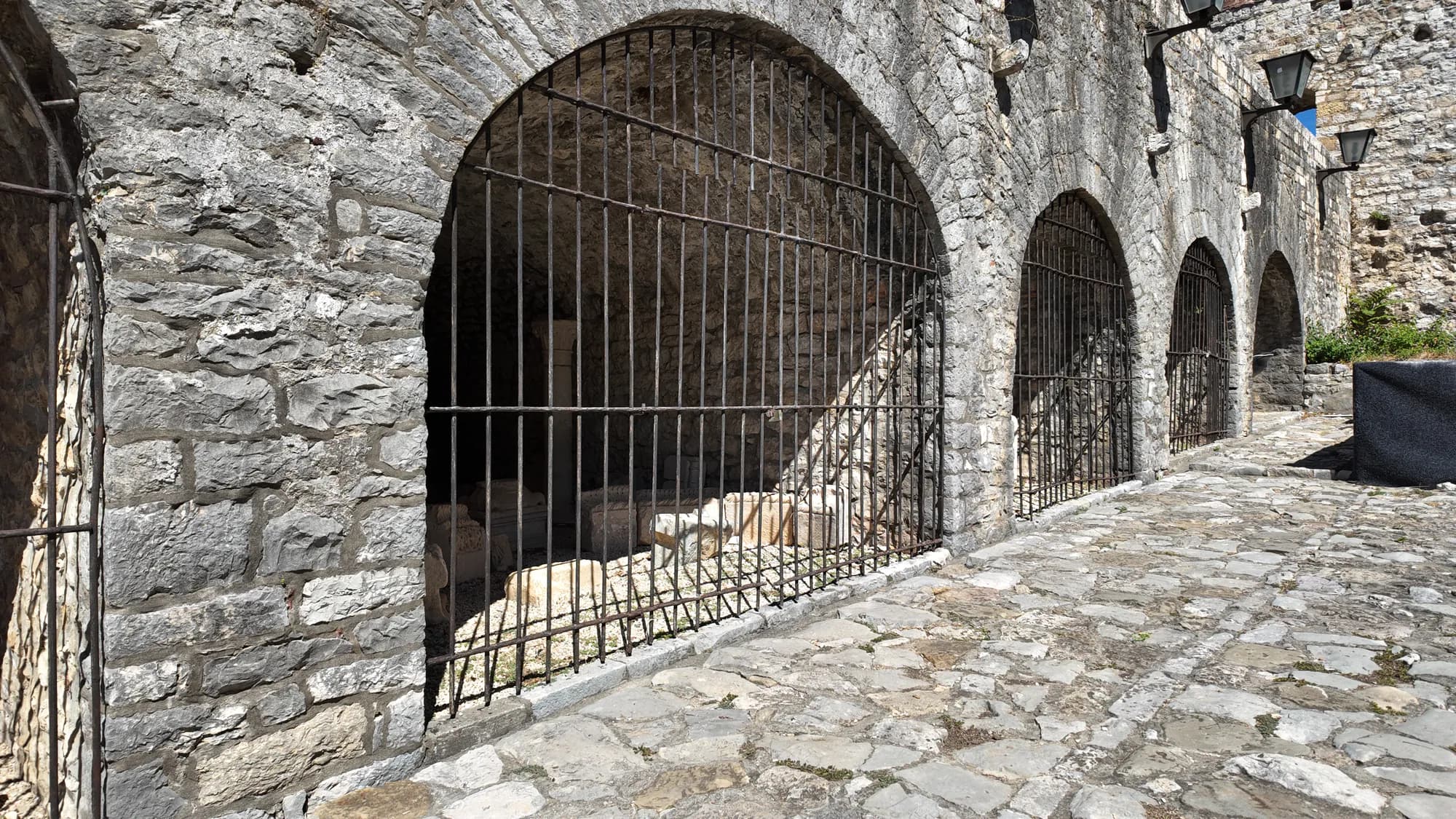
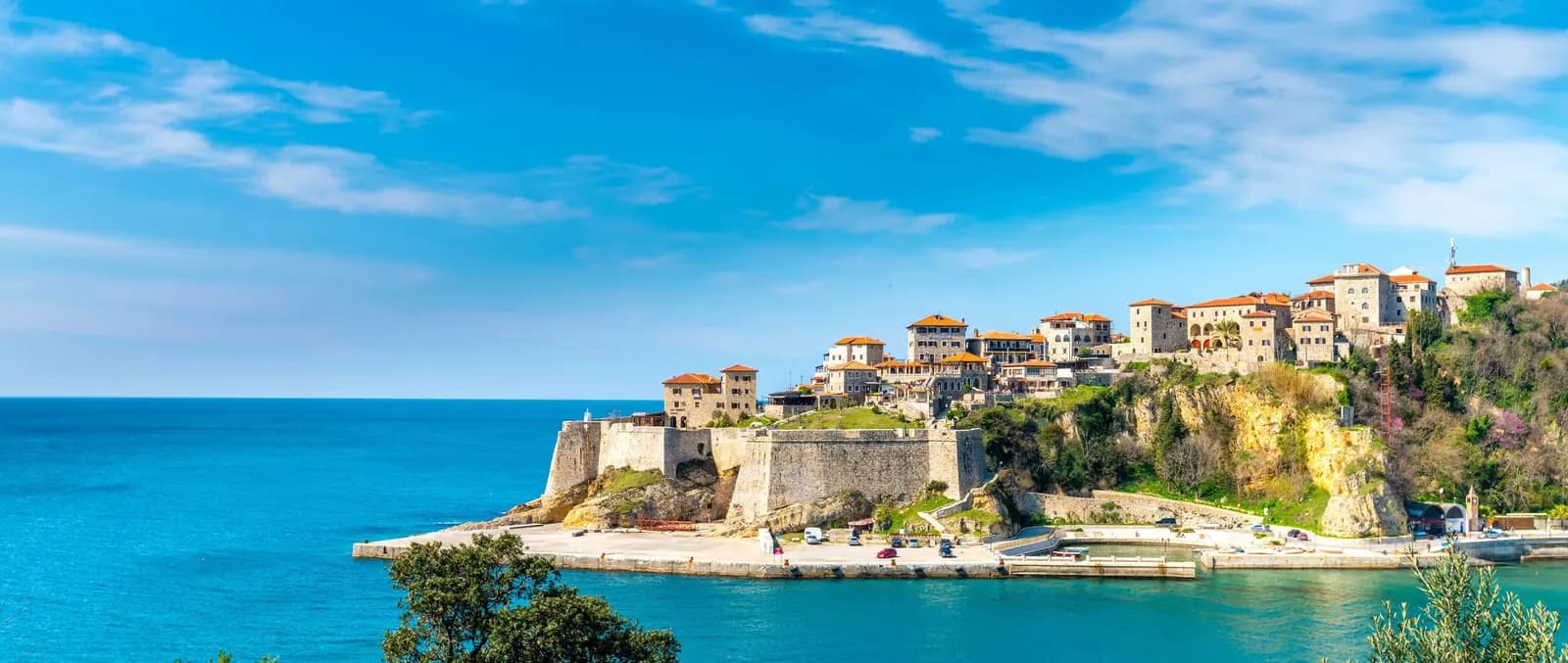
Illyrian foundations, Venetian walls, Ottoman houses: the fortified headland has been continuously inhabited for 25 centuries. The museum in the fortress keeps the layers straight; the ramparts keep the sunset.
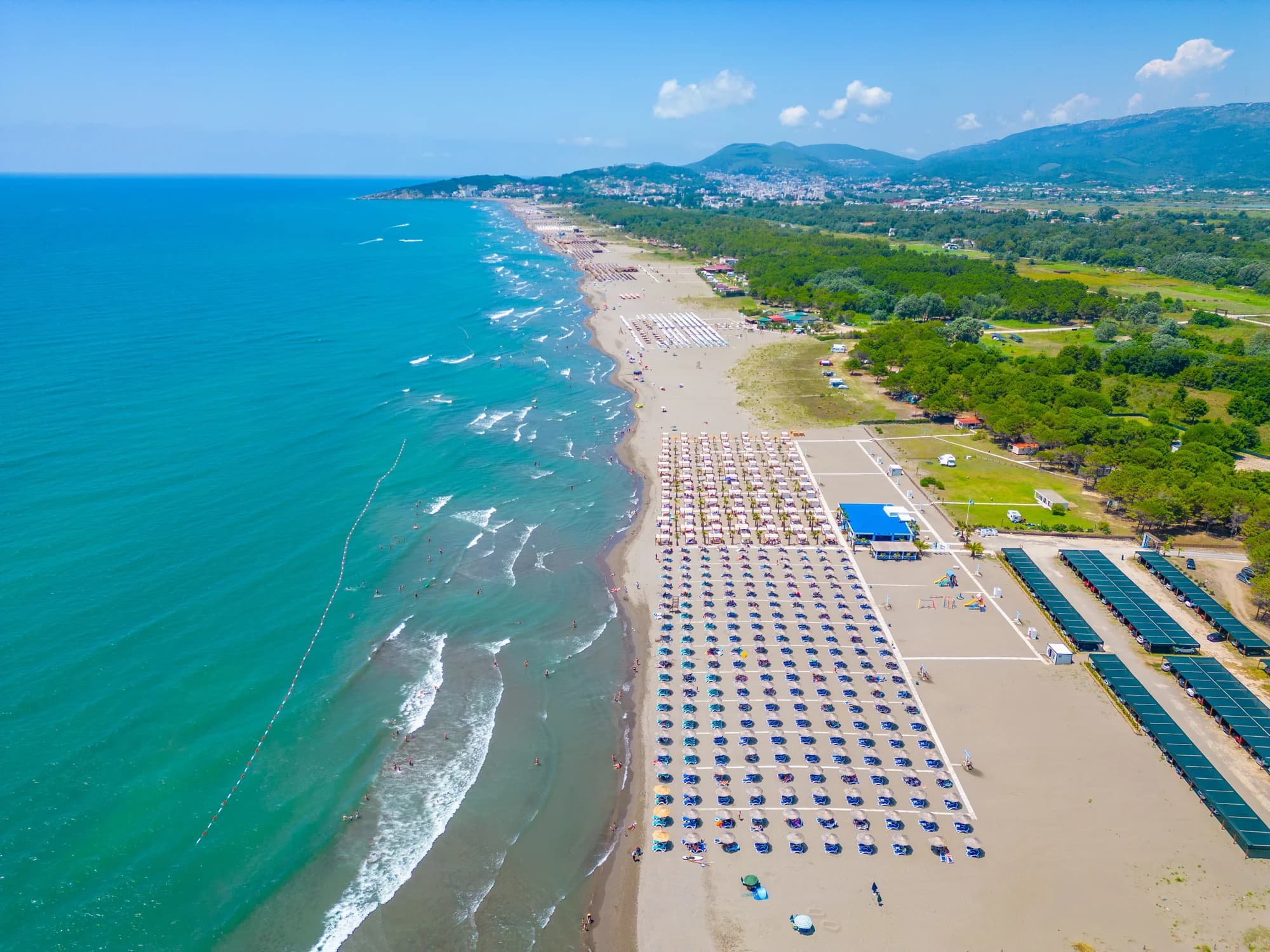
Open in Google MapsThirteen kilometres of grey-gold sand from town to the Bojana river — the eastern Adriatic’s longest beach. Sections range from full-service to entirely empty; the afternoon thermal wind makes the far end a kitesurfing capital.
Open in Google MapsThe triangular river island where the Bojana splits to meet the sea — stilt restaurants, kite schools and time moving at river speed. One of Europe’s odder and lovelier corners.
Open in Google MapsA few hours
The Old Town is an unhurried half-day; the sunset is compulsory.
One full day
Beach, birds and battlements — Ulcinj’s full range in a day.
Old Town & Mala plaža
Best for stone houses inside the walls, the bay below your window
Town centre
Best for balconies, bakeries and the evening korzo
Velika plaža strip
Best for kitesurfers and beach-first stays along the 13 km
Ada Bojana & Bojana riverside
Best for wooden river houses and off-grid quiet
34 accommodations in Ulcinj
Where the coast sleeps
Overnight stays by municipality, 2025
Quietly bigger than Kotor: 312,677 arrivals in 2025 — more than the UNESCO bay — at roughly half the price per night.
How long they stay
Average nights per arrival, 2025
Still a quick-visit coast — 4.8 nights per guest. The kitesurf crowd, who book by the week, is changing that from the beach up.
Who visits Montenegro
Share of foreign overnight stays, 2025
MONSTAT · 2025
What things cost in Ulcinj
The best-value stretch of the Montenegrin coast, by some distance.
Census population, Ulcinj municipality
Steady for thirty years and unlike anywhere else in the country: Ulcinj is Montenegro’s most bilingual municipality, with an Albanian majority and menus that switch language mid-sentence.
Illyrian walls, Roman streets, three centuries of pirates. Note the date it joined Montenegro: 1880 — before the rest of the coast by four decades.
Years per standard chronology; band widths to scale.
The wind clock
Velika plaža runs on the thermal — plan the day around it
Meanwhile, in 1571
Ulcinj, 1571: the Ottoman fleet takes Dulcigno from Venice; for the next three centuries the town is the Adriatic’s most notorious corsair port.
Lepanto — months later, the Holy League destroys the Ottoman fleet in the war’s great sea battle; among the wounded is a young Miguel de Cervantes, losing the use of his left hand.
The legend: captured five years on, Cervantes is — so Ulcinj insists — ransomed from this very port, and Dulcinea is Dulcigno’s daughter.
London: the Royal Exchange opens — Elizabethan England learns high finance.
Moscow: the Crimean Khan burns the city in the same brutal year.
The Americas — Spanish silver from Potosí is remaking the world’s money, some of it soon to pass through corsair hands off this coast.
“Local legend insists Cervantes spent his five years of pirate captivity here, and that Dulcinea took her name from Dulcigno. Historians point to Algiers — Ulcinj keeps the story, and named the Old Town square after him anyway.”
Local legend
The Cervantes legend of Ulcinj
Search thousands of hotels and apartments with live prices.
We may earn a commission from partner links. This helps us keep Montenegro.com free for travelers.
Search hotels, apartments and guest houses with live availability.
We may earn a commission from partner links. This helps us keep Montenegro.com free for travelers.

Sold near Budva, resold in Ulcinj, traded for another man and shipped to Tripoli, a Bolognese servant came home as a lin

Plan Ulcinj Salina with verified Ramsar data, corrected flamingo claims, 2026 management updates, ethical birding guidan

A documented guide to Ulcinj’s corsair captivity economy, Slave Square, Afro-Ulcinj legacy and the popular—but unverifie

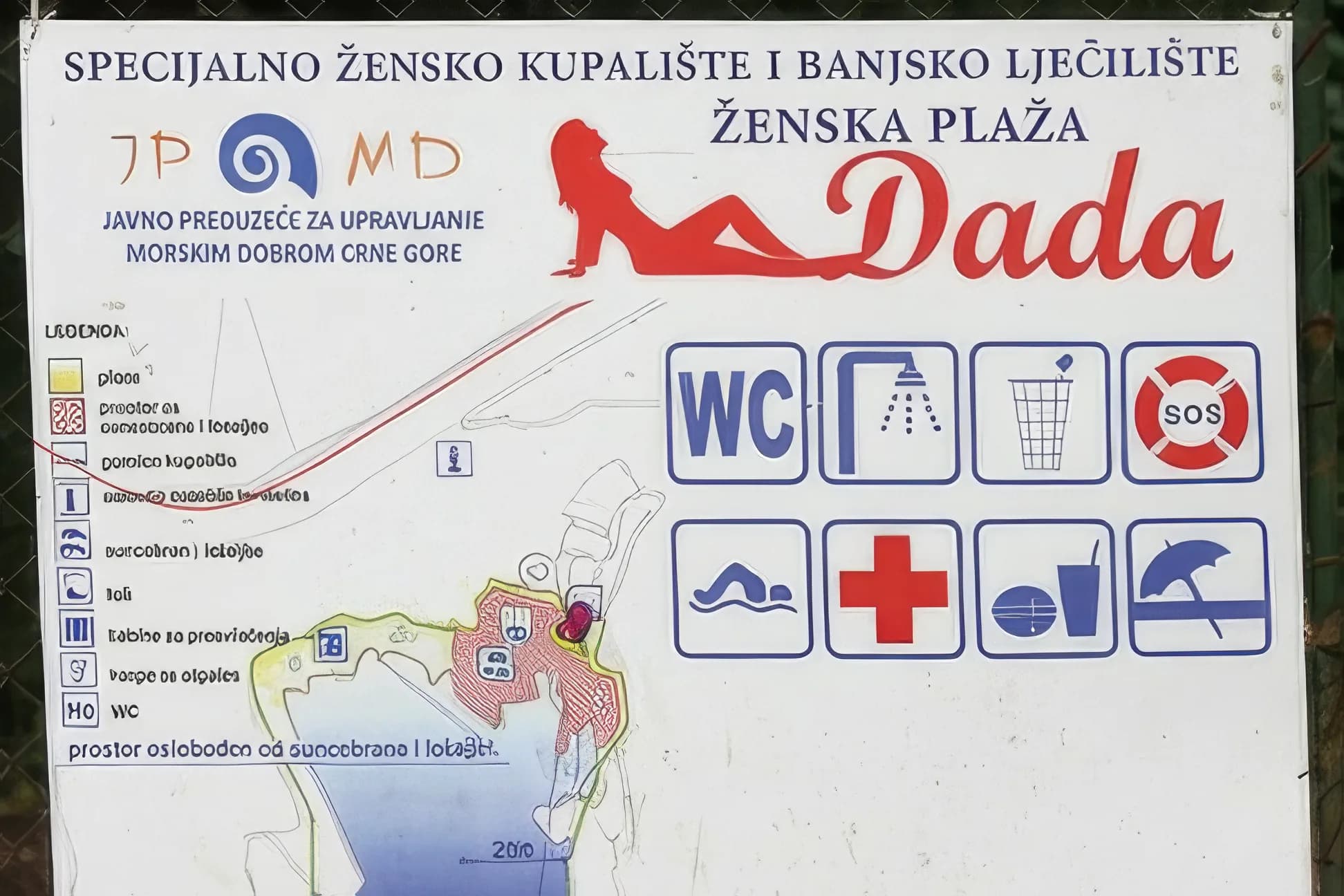
A careful guide to Ulcinj’s women-focused cove: current access checks, sulphur-spring evidence, privacy etiquette, cave

Velika Plaža (Long Beach), Ulcinj, Montenegro: 12 km of warm, sandy, family-friendly beach. Guide to getting there, kite

Plan your trip to Ada Bojana, Montenegro: a sandy river-delta island near Ulcinj for swimming, kitesurfing and fish rest
Ulcinj is Montenegro's southernmost coastal town, known for Velika Plaža — one of the Adriatic's longest sandy beaches at around 12 km — its clifftop Old Town with over 2,000 years of history, the river island of Ada Bojana with its naturist village and stilt seafood restaurants, kitesurfing, and the Salina salt pans where flamingos gather. It has a distinctive Montenegrin-Albanian culture.
It depends what you want. Velika Plaža (Long Beach) is the star — around 12 km of fine sand with warm, shallow water, among the longest sandy beaches on the Adriatic, great for families and kitesurfing. Mala Plaža, the small city beach below the Old Town, is the lively, walkable choice in the centre. Ada Bojana, Valdanos and Ladies' Beach offer naturist sands, an olive-grove cove and sulphur springs respectively.
Velika Plaža (Long Beach) stretches for around 12 km along the coast toward the Bojana River and the Albanian border, making it the longest beach in Montenegro and among the longest sandy beaches on the Adriatic. The sand is fine and the water shelves gently, so it stays shallow a long way out.
AprKite season begins — the thermal wind returns to Velika plaža through October
MaySpring migration — the salina at its loudest — flamingos, pelicans, 250+ species
AugHigh summer — the korzo runs past midnight; Bajram feasts when the calendar brings them
OctThe sea stays warm — 24°C water into October, beaches to yourself
NovOlive harvest — Valdanos groves at work — some trees on their 800th crop
The local plate
On the river that drains Lake Skadar into the Adriatic, the houses on stilts cook what swims past: carp-and-eel stew sharpened with paprika, or eel grilled plain. Order whatever the house caught, and take the afternoon.
Where Stilt restaurants along the Bojana river and on Ada
The southern coast, from Bar down to Ulcinj and on along Velika Plaža to the Bojana, with Skadar’s shore behind Rumija.
Schematic. Positions and straight-line distances from the coordinates we hold for each place; mountain roads make the drive longer. Coastline and Lake Skadar © OpenStreetMap contributors.
Ulcinj in numbers
Velika plaža — the longest beach on the eastern Adriatic
of sunshine a year — the sunniest town in Montenegro
olive trees at Valdanos, many past their 800th harvest
species recorded on the Ulcinj salina — flamingos included
2023 census — steady across three decades
MONSTAT 2023 census · Center for Bird Protection of Montenegro
Best time: May · June · September
| Place | By road | Driving |
|---|---|---|
| Pečurice | 16.8 km | about 25 min |
| Dobra Voda | 17 km | about 23 min |
| Bar | 26.3 km | about 37 min |
| Sutomore | 35.5 km | about 51 min |
| Budva | 64.4 km | about 1 h 34 min |
| Podgorica | 77.7 km | about 1 h 38 min |
| Kotor | 85.2 km | about 2 h 1 min |
Road distances routed over OpenStreetMap data, © OpenStreetMap contributors. Driving times are free-flow and take no account of summer traffic or a queue at the ferry ramp.
Ada Bojana is a triangular river-delta island of about 4.8 km² at the mouth of the Bojana River, bordered by the river on two sides and the sea on the third. It formed after an 1858 shipwreck trapped river sediment. It's famous for its naturist (FKK) resort — opened in 1973, the first in the former Yugoslavia — its wooden stilt seafood restaurants over the water, its sunsets, and kitesurfing. It's about 15 minutes from the town centre.
Yes — Ulcinj is considered Montenegro's kitesurfing and windsurfing capital. The best spots are the southern end of Velika Plaža and around Ada Bojana, where the water is flat and shallow. The reliable summer wind is the Maestral, a thermal sea breeze that usually builds from early afternoon until sunset at around 14–25 knots. Several kite schools offer lessons and gear hire in season.
Yes. The Ulcinj Salina (salt pans) draws around 250 recorded bird species, including greater flamingos and the rare Dalmatian pelican. Spring and autumn migration bring the largest numbers, but it's rewarding from roughly April to October. Early morning and late afternoon are best, and local guided birdwatching tours are available.
Ulcinj is at the southern end of the Montenegrin coast, beyond Bar, about 25 minutes from the Albanian border. Coastal buses run from Bar, Budva, Kotor and Podgorica in season (a Kotor fare is roughly €7–8 one way; check current prices locally), and the bus station is about 2.5 km from the centre. The nearest airports are Podgorica and Tivat. A car is the easiest way to reach the spread-out beaches, Ada Bojana and the Salina.
June and September are the sweet spot — warm sea, long days and fewer crowds than the July–August peak, which is liveliest and best for kitesurfing wind. May and October are quieter and good for sightseeing and birdwatching at the Salina, which peaks in spring and autumn migration. Early morning and the hours before sunset are the most rewarding times for both the beaches and the Old Town.
Yes — especially for sand, history and somewhere distinct from the rest of the coast. Ulcinj combines one of the Adriatic's longest sandy beaches, a clifftop Old Town with two millennia of history, the river island of Ada Bojana, excellent kitesurfing and a flamingo-filled nature reserve. It's less polished than Kotor or Budva, which is exactly its appeal for travellers after warm, shallow swimming and big open beaches.
No — the nearest is Podgorica Airport (TGD), 70 km away by road.
From about 13 °C in February to 25 °C in August. It holds above 22 °C from June to September, which is the swimming season. Regional normals from the Bar station, not a city-precise reading.
64.4 km by road, about 1 h 34 min by car.
Of the 16 places listed on Montenegro.com in Ulcinj, the middle one costs €53 a night. Across all our Montenegro listings the median is €88. That is our own inventory rather than a survey of the town.
The UK Foreign, Commonwealth & Development Office (FCDO) has no advisory against travel to Montenegro; it last reviewed its guidance on 13 August 2026. That is their assessment of the country as a whole, not ours and not a judgement about Ulcinj, so read it yourself before you travel. The emergency number in Montenegro is 112.
The vast former salt-works east of town is now one of the Mediterranean’s great bird wetlands — flamingos, pelicans and 250-plus species on the spring and autumn passage. Bring binoculars, go early.
Open in Google MapsA horseshoe cove ringed by an ancient olive grove — eighteen thousand trees, many centuries old, some near their thousandth year. The harvest still happens by hand each November.
Open in Google MapsRebuilt on the shore below the Kalaja, the mosque whose lamp once guided boats home — the emblem of a town where the muezzin and the church bells share the evening air.
Open in Google MapsTwo days minimum — the town and the wild south are different countries that happen to share a municipality.