Bearcreek Cemetery is one of the clearest surviving records of Montenegrin migration into Montana’s coal country—but it is not exclusively Montenegrin and a gravestone is not a complete biography. The cemetery’s Cyrillic inscriptions preserve villages, relatives, dates and community ties that were often flattened by English-language indexes. Around them lies a larger story of railroads, underground work, boarding houses, churches, unions, children and a town whose industrial purpose disappeared before its memory did.
This guide explains why Bearcreek grew, what the Montenegrin stones reveal, how South-Slav identities appear in surviving archives, and how descendants can turn an inscription into a documented family-history trail. The companion Bearcreek gravestone guide reads eight individual monuments line by line; this page places them in the wider regional story.
Which records answer which questions
| Question | Strongest available record | What it can establish | What it cannot establish alone |
|---|---|---|---|
| Where was a person born? | Legible gravestone plus civil, church or immigration record | Named village or district and an independent match | Modern nationality inferred from surname |
| Did the person mine coal? | Census occupation, company payroll, union or accident record | Person-specific job and industry | Occupation from residence in Bearcreek |
| When did a family arrive? | Census, passenger list, border crossing and naturalization file | A documented date range and legal status | One exact journey from family memory alone |
| How large was the community? | Enumeration with a stated identity rule | Count for a defined year and category | “Largest colony” without comparable records |
| How did people live together? | Oral history, directories, newspapers, churches and fraternal records | Households, institutions, work and remembered relationships | A universal experience for every immigrant |
| Why did someone die? | Death certificate, coroner, mine or newspaper record | A recorded cause in that source | Cause from age, job or headstone design |
Why Bearcreek became a coal town
Coal had been identified in the Bear Creek field during the 1880s, but the National Register nomination for the Smith Mine says commercial development began in earnest in 1906 with the arrival of the Yellowstone Park Railroad. Rail access turned underground reserves into a marketable industrial resource. Montana Coal & Iron Company expanded the Smith Mine; other operators opened nearby workings; housing and businesses formed along the coulees.
A separate National Register file for the Bearcreek Bank records 302 residents in 1910, with the mines employing about half of the adult male population. It lists 23 businesses, including ten saloons, as well as hotels, shops, stage lines and a water system. Bearcreek depended on coal, but it developed institutions and family life rather than functioning only as a row of temporary bunkhouses.
The Montana Historical Society marker text gives the clearest demographic snapshot: at the community’s height in 1920, one-third of residents were immigrants and another third were children of immigrants. It lists Croatian, Montenegrin, Slavic, Italian, Scottish, German, Finnish, French and English names in the cemetery. Bearcreek was therefore a multiethnic industrial community, not a Montenegrin enclave sealed from its neighbours.
Montenegrin does not mean every South Slav
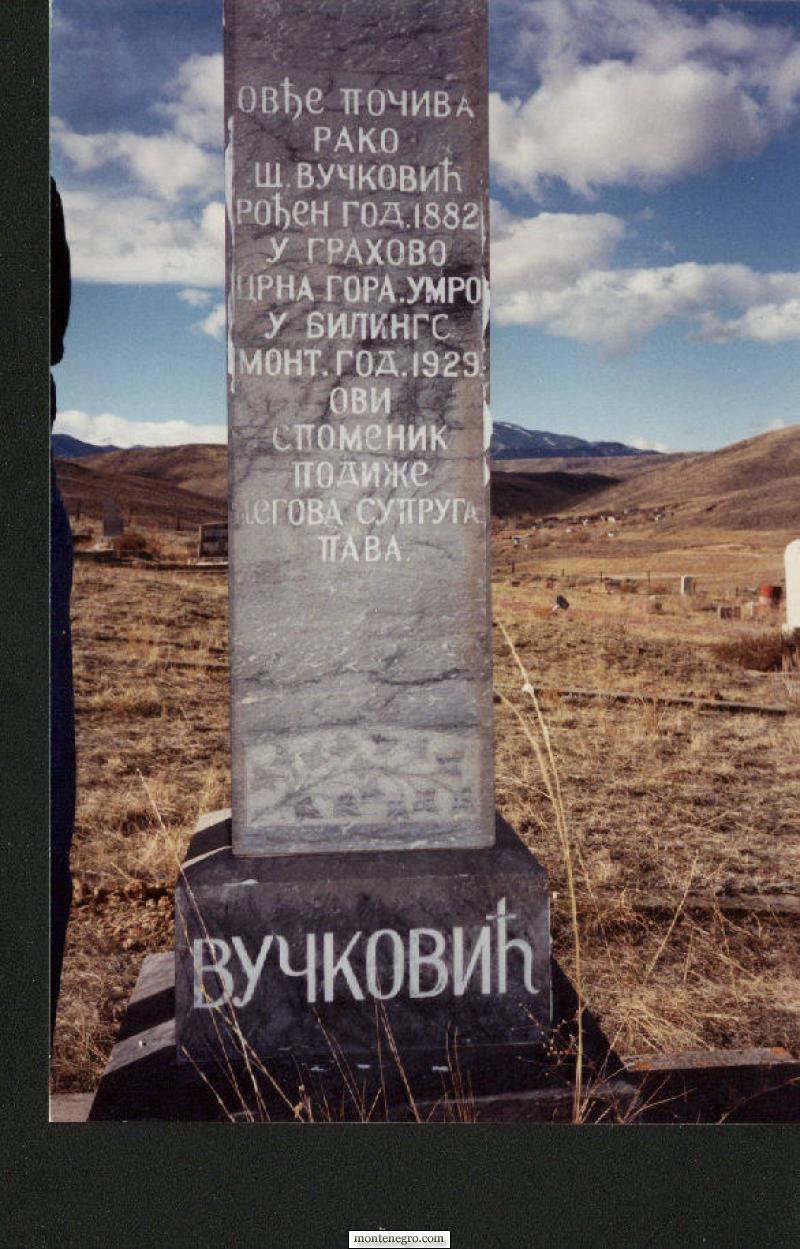
Names changed as people crossed languages and record systems. Vučković can appear as Vukovich; Banićević as Banichevich; Samardžić as Samardjich. A census enumerator might write a state, an empire, a regional term or a language label that no longer matches a modern map. Cyrillic could be transliterated phonetically, then recopied into a cemetery survey decades later. Search variants are necessary, but they are not permission to rewrite the original.
The Anna Zellick Oral History Collection is particularly valuable. Montana State University lists it as collection 2341, while its public finding aid describes seventeen interviews covering Slavic settlers in Red Lodge, Bearcreek and Roundup from roughly 1890 to 1944. The indexed material addresses immigration, coal work, education, religion, unions, family life and relations among groups. It treats Montenegrins, Serbians, Croatians and Slovenians as related communities rather than interchangeable labels—a warning against merging every Cyrillic stone or South-Slav surname into one nationality.
The same collection shows community life extending beyond the mine: gardens, boarding houses, food, music, schools, picnics, churches, fraternal organizations and naturalization appear in its detailed index. Oral history is not a payroll or death certificate, but it can reveal the institutions that made an industrial settlement inhabitable. It also gives researchers surnames and relationships to test in other records.
What the cemetery records about a community
Montana’s marker compilation records 473 burials at Bearcreek Cemetery, including 107 children and 22 people associated there with the Smith Mine disaster. Those figures belong to the published marker text; they should not be treated as a continuously updated burial register or used to calculate a mortality rate without a population denominator and time period.
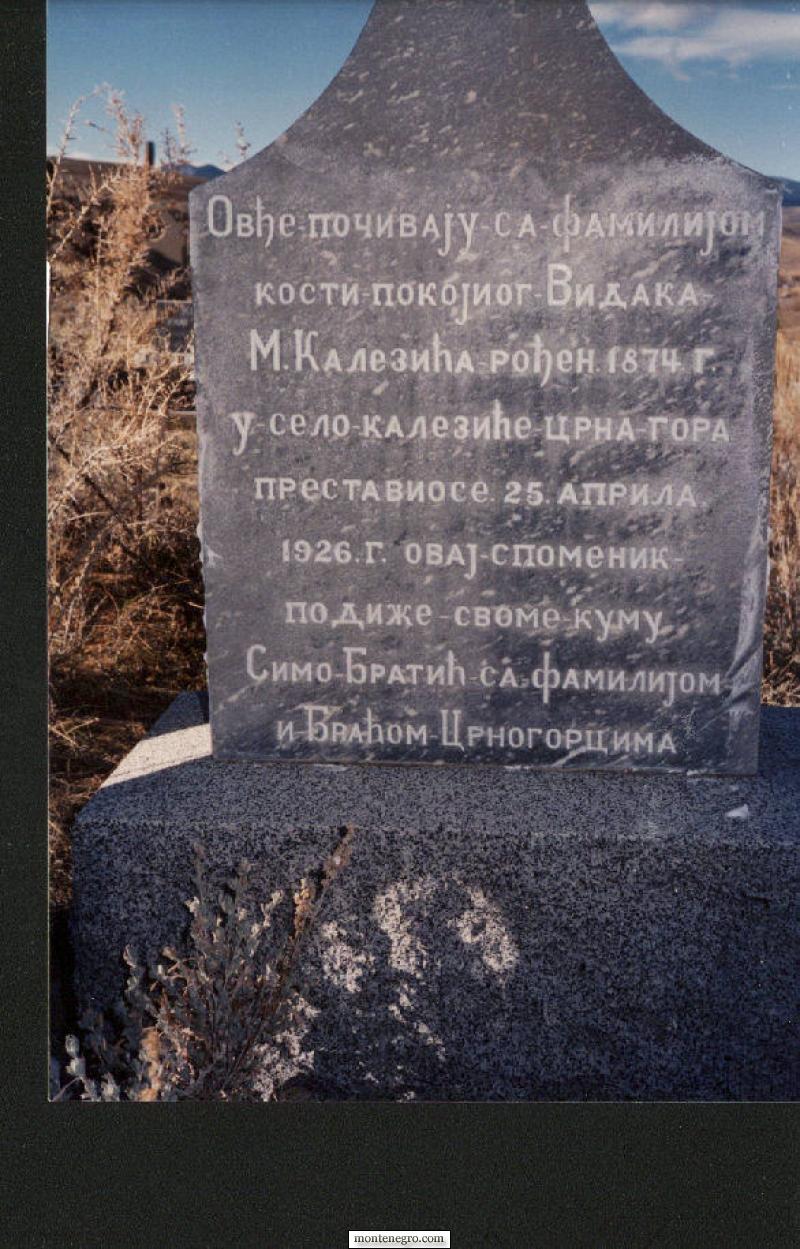
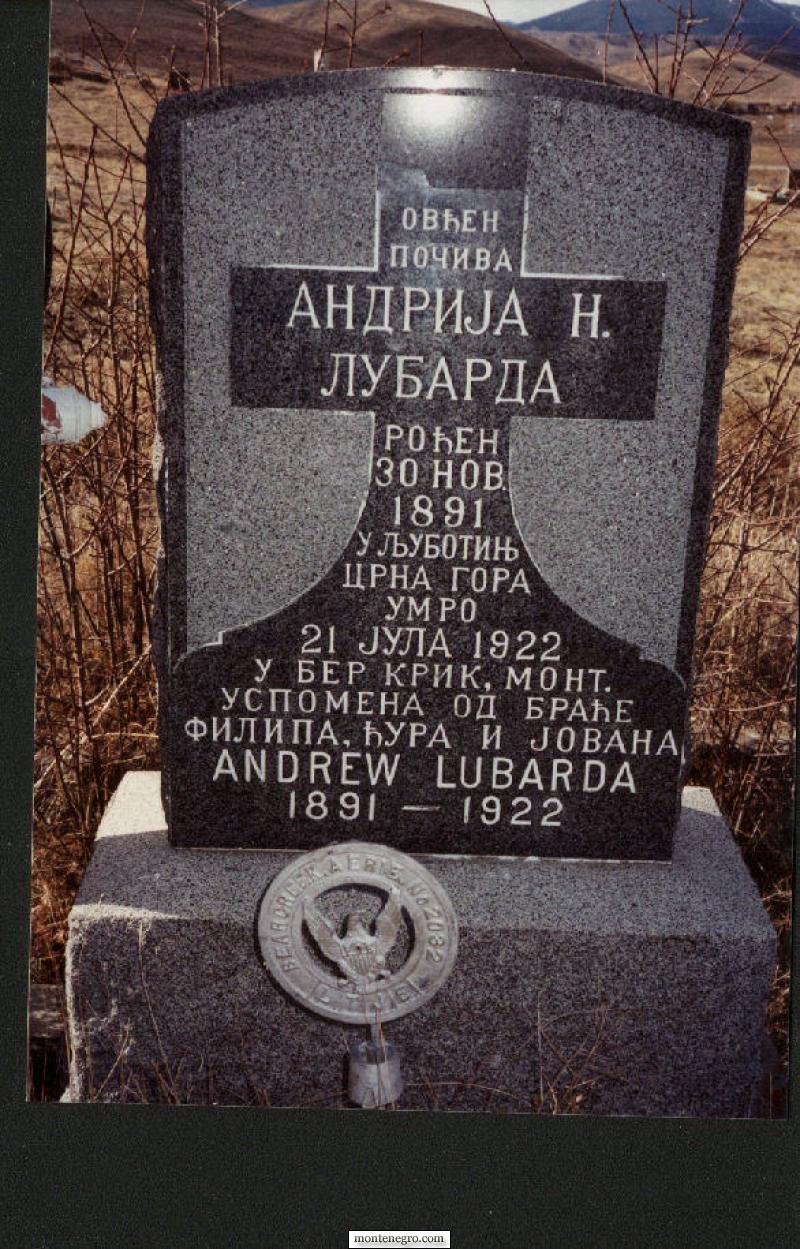
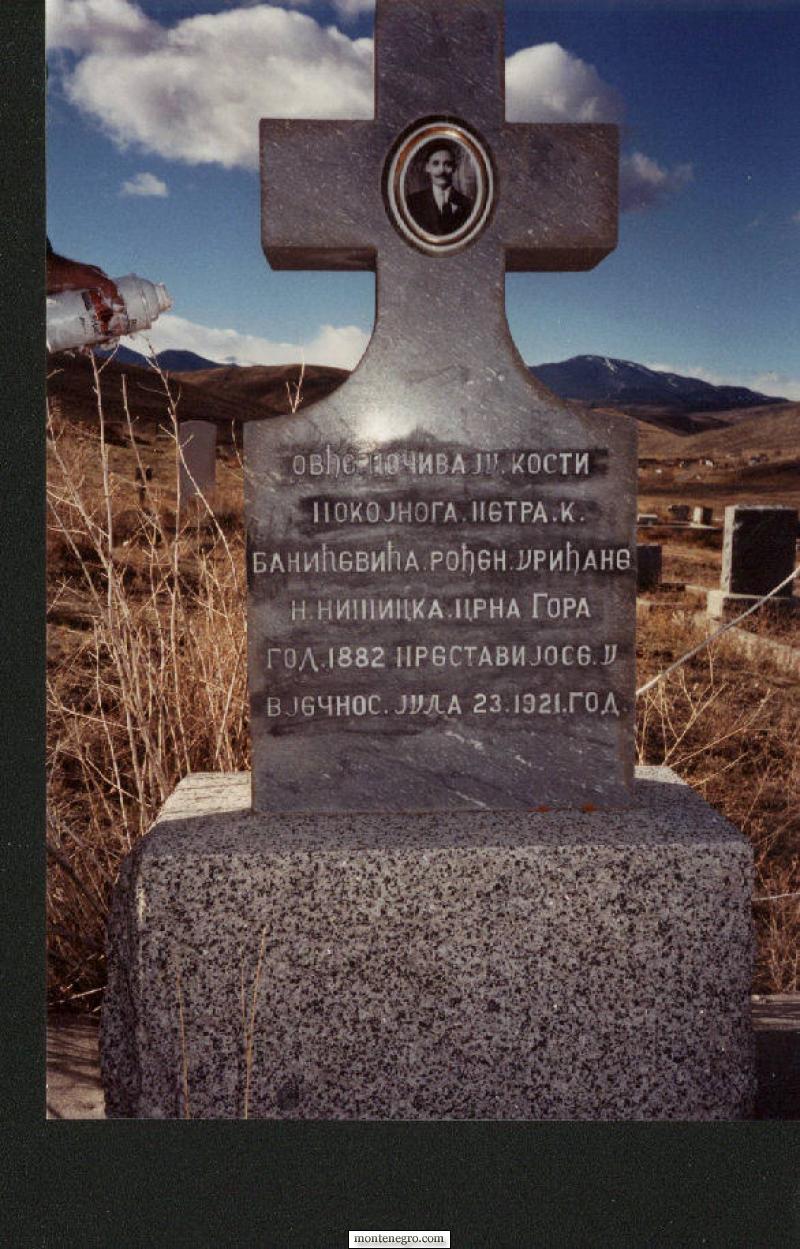
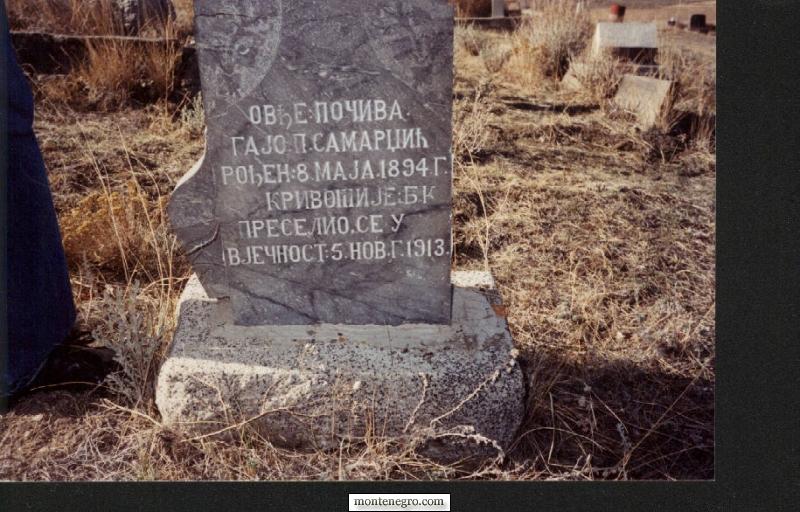
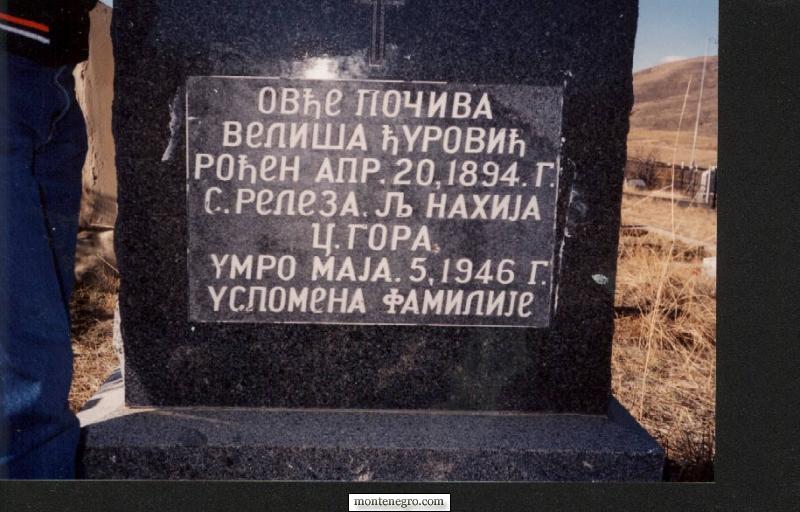
The stones nevertheless demonstrate more than individual death. Some name a spouse, brothers, a godparent or the group that paid for a monument. Some preserve a precise village. Portrait ceramics, crosses, Cyrillic lettering and bilingual panels show choices about religion, language and remembrance. A family or community that could commission a stone was asserting identity in public ground far from the place named as home.
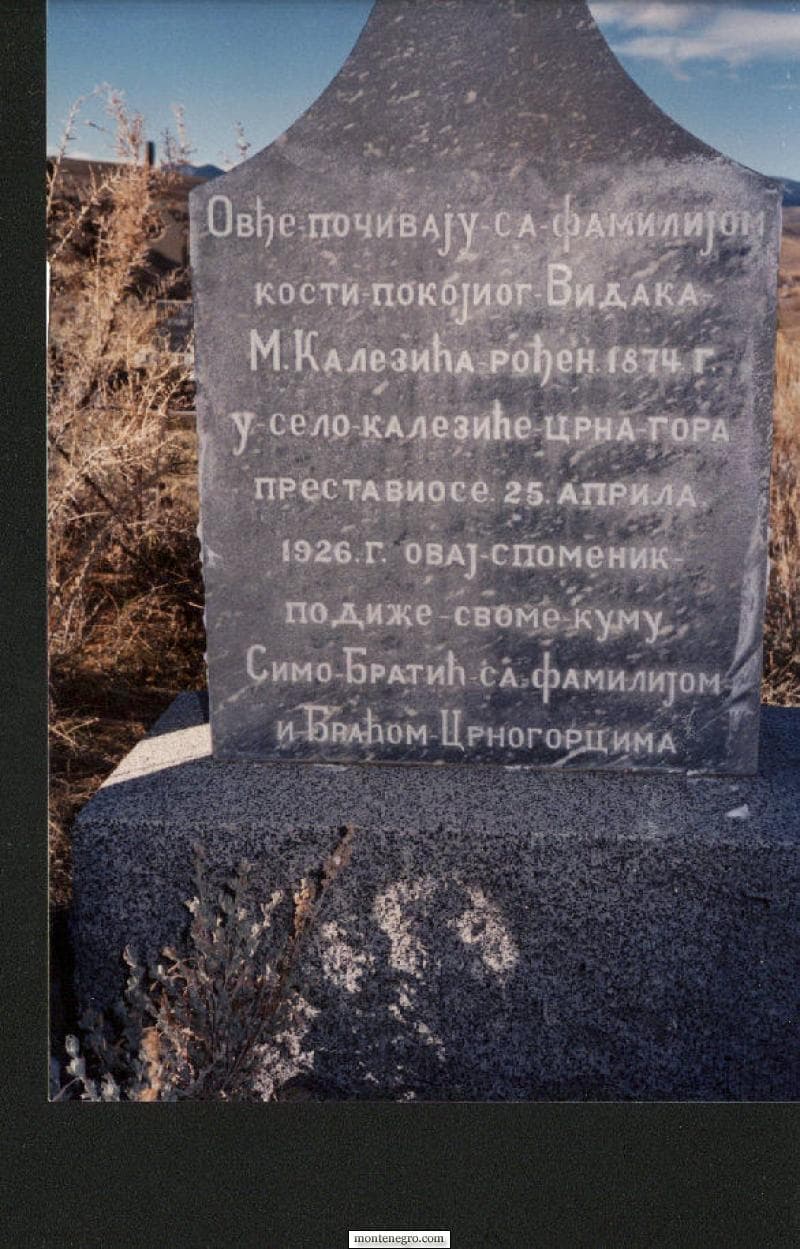
The public Carbon County transcription is a useful finding aid, not the original register. It can independently match dates and surface spelling variants, but it compresses what a monument says. Vidak Kalezić’s row, for example, gives a Latinized name and dates; the photograph also names Kalezine, Montenegro, and the people who erected the stone. Research improves when the image and index are compared rather than choosing one.
Mining danger without invented causes of death
Underground coal work was dangerous, but that general danger does not explain why a particular person died. Gravestones usually do not supply a cause. Connect each individual to a death certificate, coroner’s record, mine report or contemporary newspaper before attributing a death to an accident, tuberculosis, silicosis or another condition.
The best-documented catastrophe is separate. On 27 February 1943, explosion and poison gas killed 74 miners in Smith Mine No. 3, according to the National Register nomination. Montana’s marker text describes a United Mine Workers memorial to 75 men: 74 who died in the mine and one rescuer who died later. Those official formulations reconcile rather than contradict each other, but most of the Montenegro.com stones predate 1943 and must not be folded into the disaster.
The Library of Congress Historic American Engineering Record says the underground workings of Foster Gulch were connected to Smith No. 3. After the disaster, operations shifted toward Foster Gulch; two more miners died in a rock fall during the summer of 1943, and the mines continued until 1953. Bearcreek’s industrial decline was therefore a sequence, not an instant abandonment the moment one ore body was exhausted.
| Year | Event |
|---|---|
| 1880s | coal field known |
| 1906 | rail-led growth |
| 1910 | 302 residents |
| 1920 | immigrant peak |
| 1943 | Smith disaster |
| 1953 | mines close |
| 1988 | photo survey |
| Caveat | The cemetery is not a frozen census. |
| Caveat | It accumulated burials across generations, while names, boundaries, jobs and record systems changed. |
| Caveat | Each claim needs a source tied to a person, date and purpose. |
Source: mhs.mt.gov, npgallery.nps.gov, loc.gov, montenegro.com
From Montenegro to Montana: what can be traced
The photographs preserve origins across several Montenegrin districts: Grahovo, Ljubotinj, Krivošije, Lješanska Nahija and villages associated with Nikšić. Those names make the diaspora geographically specific. The Nikšić guide provides present-day context for one major origin region, while the Dragalj and Krivošije guide explains the karst plateau named on Gajo Samardžić’s stone.
A place name is still only one end of the route. The National Archives notes that the 1900, 1910, 1920 and 1930 censuses record a reported immigration year, and several record naturalization status. The 1910 schedule also captures native language, occupation and industry. These fields can point toward passenger arrivals, border crossings, naturalization petitions and mine employment—but ages and immigration years often vary between enumerations.
Do not assume every Montenegrin entered through Ellis Island. One Barovich oral history indexes Ellis Island, but a family could arrive through another U.S. port, Canada or Mexico, and a later memory can simplify a complicated route. Work backward from the latest reliable census and naturalization record, then search a range of years and name variants.
Practical genealogy workflow
- Photograph and transcribe literally. Record every line, letter, punctuation mark, symbol, damaged area and named relative. Save the original Cyrillic before transliterating. The Montenegro language guide explains the modern language and script context, but an old inscription still requires period-aware reading.
- Create a variant table. List Cyrillic, diacritic Latin, plain Latin and phonetic American spellings. Search by dates and relatives as well as surname.
- Check the cemetery transcription. Use it to find a row and nearby family burials, then return to the photograph for details omitted from the index.
- Build the household in census records. Track birthplace, parents, language, immigration year, naturalization, occupation, industry, address and neighbours. Preserve contradictions instead of averaging them.
- Find arrival and citizenship files. Search a date range around each reported immigration year. Naturalization petitions can contain birthplace, arrival and family information, but form content varies by era.
- Add newspapers, directories and vital records. Billings Public Library points to early papers, vital indexes and city directories. Search Bearcreek, Red Lodge and Billings because a person could work in one place, receive care in another and be buried near family.
- Use oral histories for questions. The Zellick collection can identify organizations, foodways, churches, unions and associates. Test every person-specific claim against contemporary records.
- Document the archive trail. Ask for accession number, image rights, scan resolution and notes. The original Montenegro.com credit says Bill and Corky Knebel compiled the 1988 photo data and credits Cleve Kimmel with publication permission; current public finding aids do not independently establish the full custody chain.
For comparison, the Montenegrin emigrants in Alaska archive shows how another labour frontier generated different records. The General Madariaga diaspora account and Montenegro.com diaspora archive history place the Montana photographs within a much wider migration record.
Visiting and documenting a cemetery responsibly
Bearcreek Cemetery is a burial ground, not an abandoned film set. Identify the current custodian and access rules before travel; remain on established routes; do not block gates; and give mourners and family visitors privacy. Conditions can be dry, windy or wintry, and the ground around old monuments can be uneven. Do not lean on, climb over or attempt to straighten a marker.
The National Park Service recommends systematic photography and written condition notes. Record date, direction, overall setting and close details without moving fragments. Do not apply chalk, shaving cream, bleach, detergent or other substances to make letters visible. Do not rub or clean a stone unless the owner or manager authorizes a conservation-appropriate method. A brighter photograph is not worth accelerating surface loss.
Use raking natural light, a reflector held away from the stone, or multiple exposures instead of touching the surface. Keep coordinates private when a vulnerable marker or family request warrants it. If you notice damage, report it to the custodian with photographs; do not improvise a repair. The goal is to leave the physical record unchanged and improve the documentary record around it.
Questions the surviving records cannot answer alone
Bearcreek’s surviving records document a substantial Montenegrin community, but they do not establish that Montana contained the largest Montenegrin colonies in the United States. Nor did every mining settlement vanish immediately when ore was exhausted. Federal records trace Bearcreek’s decline through the 1943 disaster and continued Foster Gulch operations until 1953.
Mining accidents, tuberculosis and silicosis belong in the region’s labour history, but the photographed stones do not prove a cause of death person by person. Likewise, no reliable Bearcreek record presented here connects publisher William Jovanovich’s birthplace to these Montana settlements. Keep both questions open until a person-specific record answers them.
Return visits, identity and family memory varied across individuals and generations. Do not assign one political motive to an entire diaspora whose experiences survive in many countries, languages and record systems.
Frequently asked questions
Is Bearcreek Cemetery a Montenegrin cemetery?
Not exclusively. Montana’s official marker describes a multiethnic cemetery. Montenegrin and other Cyrillic stones form a historically important cluster within it.
Were all Montenegrins in Bearcreek miners?
No source supports that assumption. The local economy centred on coal, but occupation must be established for each person through census, company, union, accident or newspaper records.
Was Bearcreek the largest Montenegrin community in America?
No comparable national enumeration proves that ranking. Bearcreek is unusually well documented through stones and oral histories, but documentation quality is not the same as population size.
Did the Smith Mine disaster kill the people in these photographs?
Mostly no. The six stones shown on this page have death dates outside 27 February 1943. The disaster is essential regional context, but it cannot be assigned as an individual cause without a matching record.
Why do the English spellings differ?
Cyrillic transliteration, lost diacritics, phonetic spelling and later transcription produce variants. Search them all, but preserve the original inscription and explain which source uses each form.
Can I make a gravestone rubbing?
Do not do so without explicit permission and a condition assessment. Rubbing, cleaning and applied substances can damage weathered stone. Photography and written documentation are safer first methods.
Where should descendants begin?
Start with the companion stone guide and public cemetery transcription, then build the household in census records. Use reported immigration and naturalization clues to locate arrival and citizenship files, and contact Montana repositories for newspapers, oral histories and original survey material.